Saving a thumbnail is easy. Whether you may use it afterwards is a separate question. This guide covers the basics in plain words. It is general information, not legal advice, and the rules differ from country to country.
Who owns a thumbnail
A thumbnail is a creative work. It normally belongs to the person or company that made it, which is usually the owner of the channel. Being visible to everyone on YouTube does not make it free to reuse.
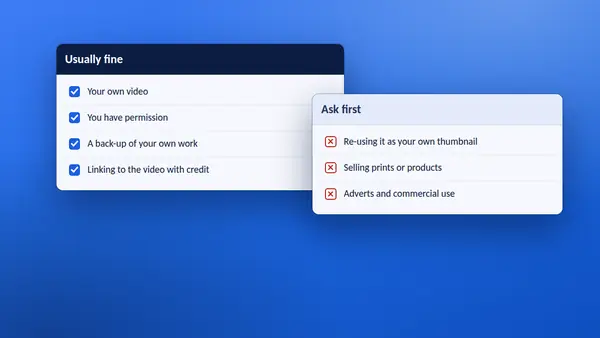
Uses that are usually fine
- Your own videos. Back up, reuse and rework your own artwork as much as you like.
- With permission. If the owner says yes, you are covered for what they agreed to.
- Private reference. Keeping an image in a folder to study layout and colour is not publishing it.
Uses where you should ask first
- Putting someone else's thumbnail on your own video or channel.
- Using it in adverts, products or anything you sell.
- Editing it and presenting the result as your own work.
- Republishing a large collection of other people's thumbnails.
What about writing about a video?
News, reviews, commentary and teaching sometimes fall under exceptions such as fair use or fair dealing. These exceptions depend on the details and on the country. The safest way to show someone else's video in an article is to embed it. The embedded player displays the thumbnail by itself, and the owner stays in control.
How to ask for permission
- Find the contact address on the channel's About page.
- Say which image you want to use, where and for how long.
- Offer a credit and a link back to the video.
- Keep the reply.
Most creators answer a polite, specific request.
People in the picture
Thumbnails often show faces. Using a person's image to promote something can raise separate issues from copyright, so take extra care with commercial uses.
If someone uses yours
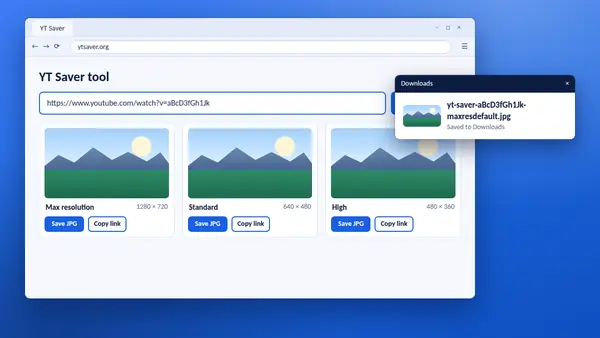
Contact them first. If that fails, YouTube and most platforms have a copyright complaint form. Having your original files, or a dated copy saved with the YT Saver tool, helps to show the work is yours.
The short version
Your own work: go ahead. Someone else's: embed the video or ask.